

Chess and the Anthropology of Strategic Play
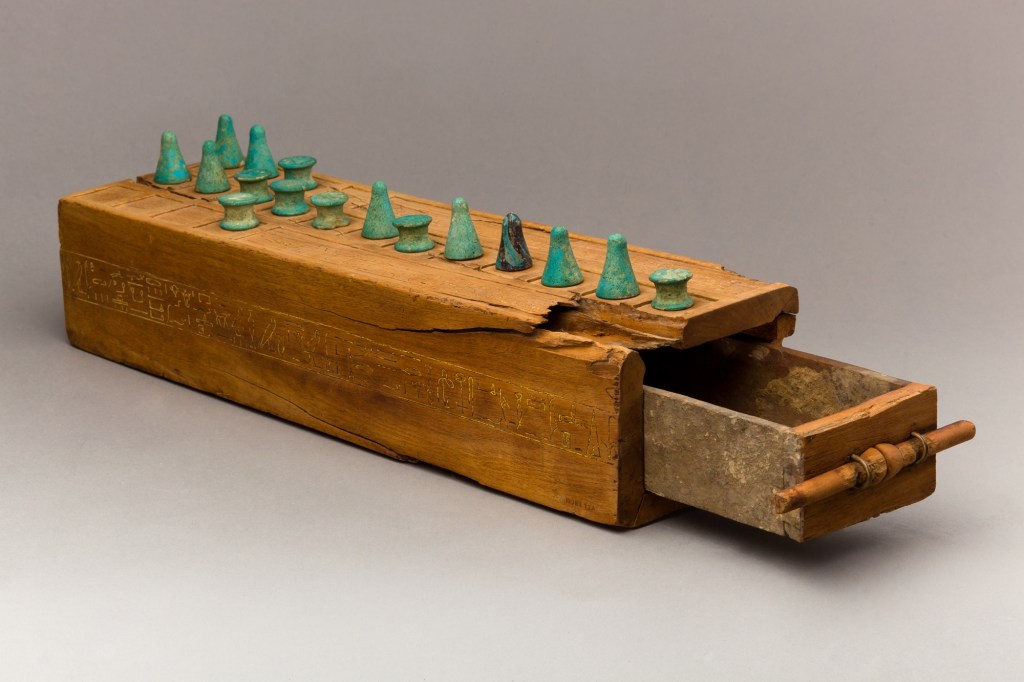
Game Box Inscribed for Taia and His Family
New Kingdom, ca. 1550–1295 B.C.
Introduction
Chess is frequently described as a game with a single origin and a linear path of diffusion. From an anthropological perspective, this framing is inadequate. Chess is more accurately understood as the historical crystallization of much older practices of structured play, abstraction, and strategic reasoning that developed independently and interactively across societies.
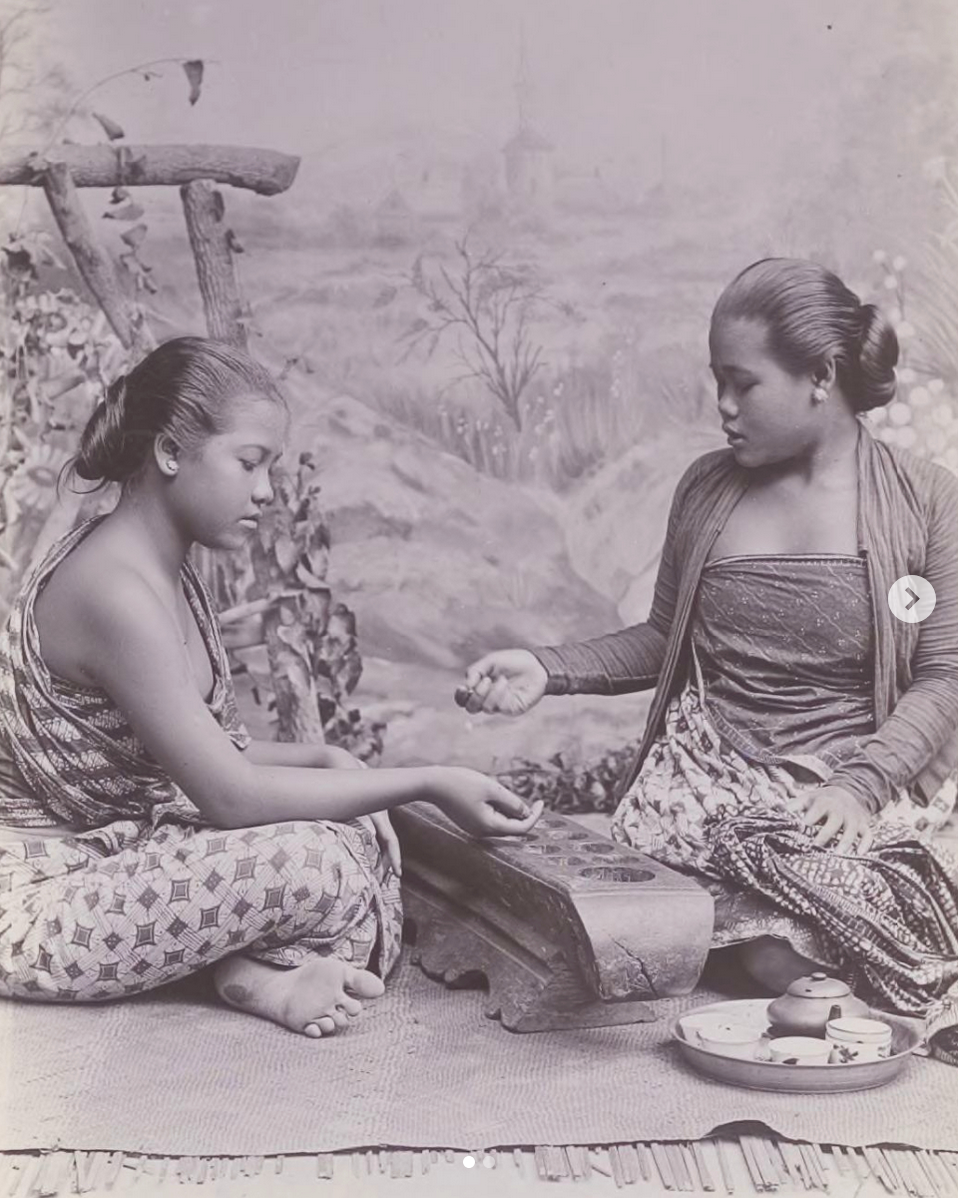
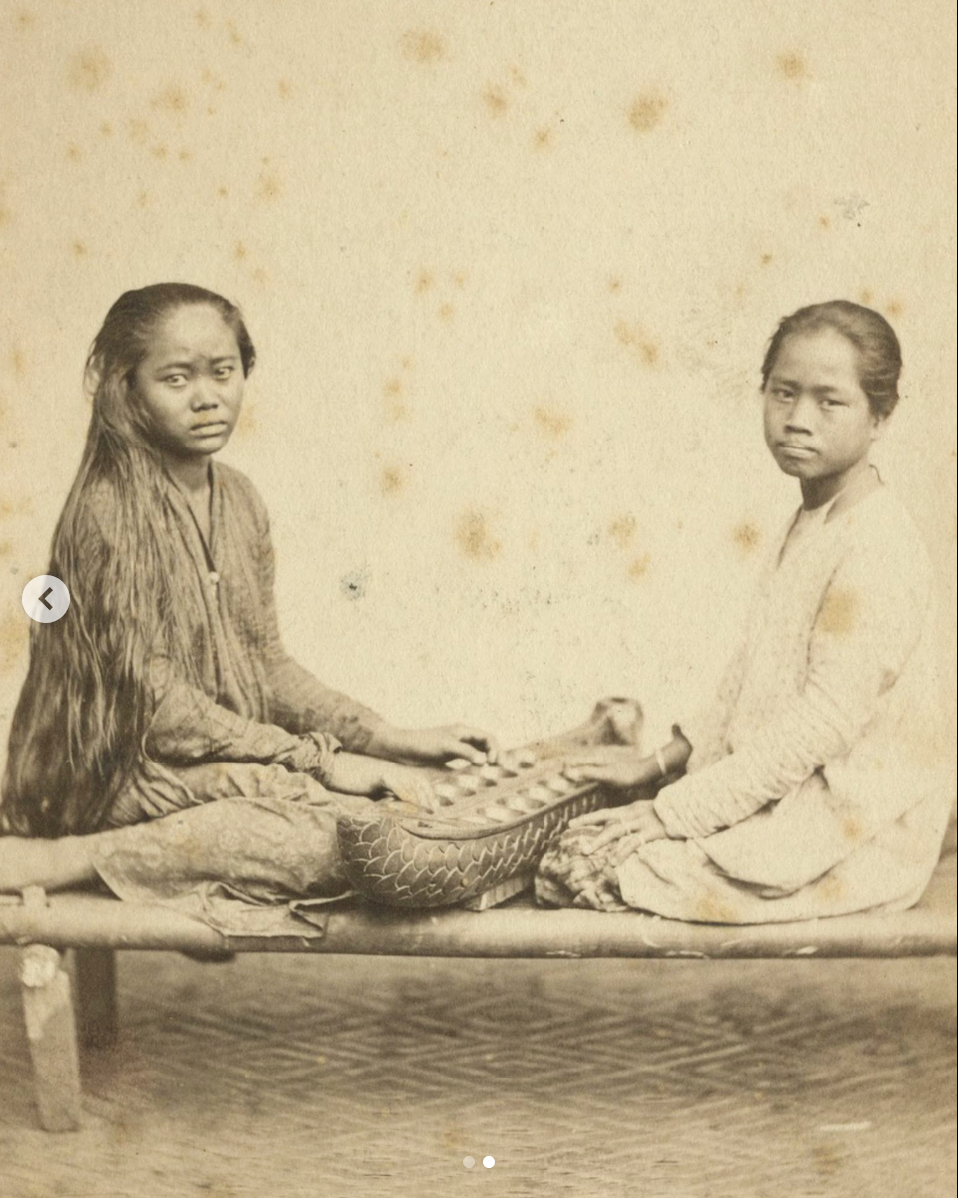
Congklak, A Traditional Game of Indonesia
This article situates chess within the broader history of human games, treating it not as an isolated invention but as one expression within a long continuum of cultural techniques for thinking about conflict, order, and consequence.
1. Early Systems of Abstract Play: Mancala-Type Games
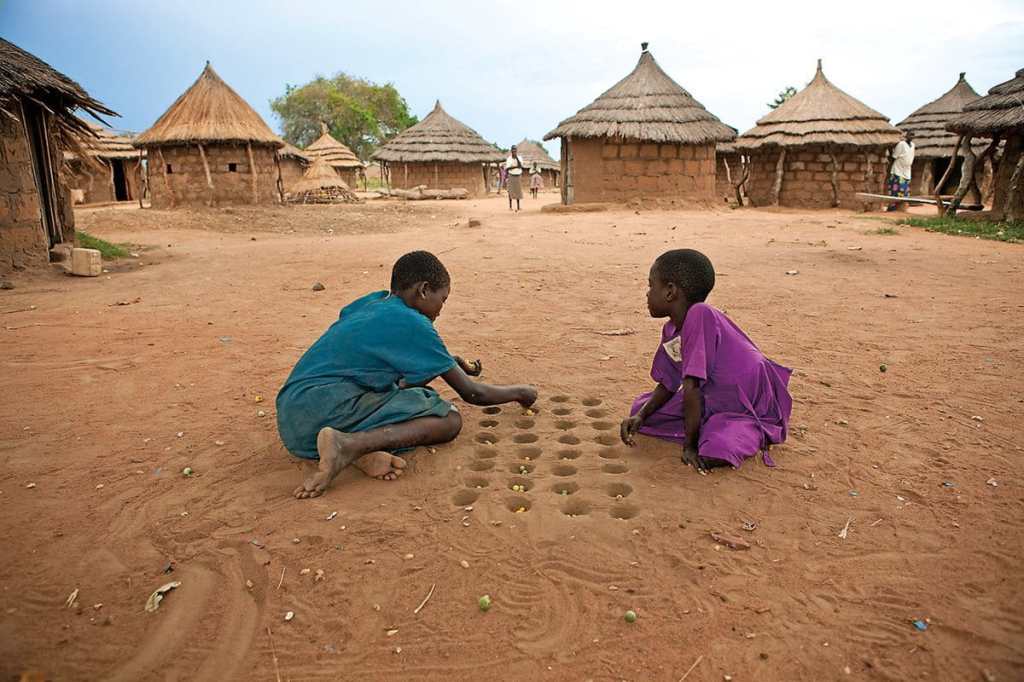
Archaeological and ethnographic records indicate that pit-and-counter games—commonly grouped under the modern term mancala—are among the earliest formal games known. Boards carved into stone, wood, or earth appear across Africa, with related forms documented in the Middle East and South and Southeast Asia. In southern Africa, similar games remain part of informal play traditions, including among Khoisan communities.
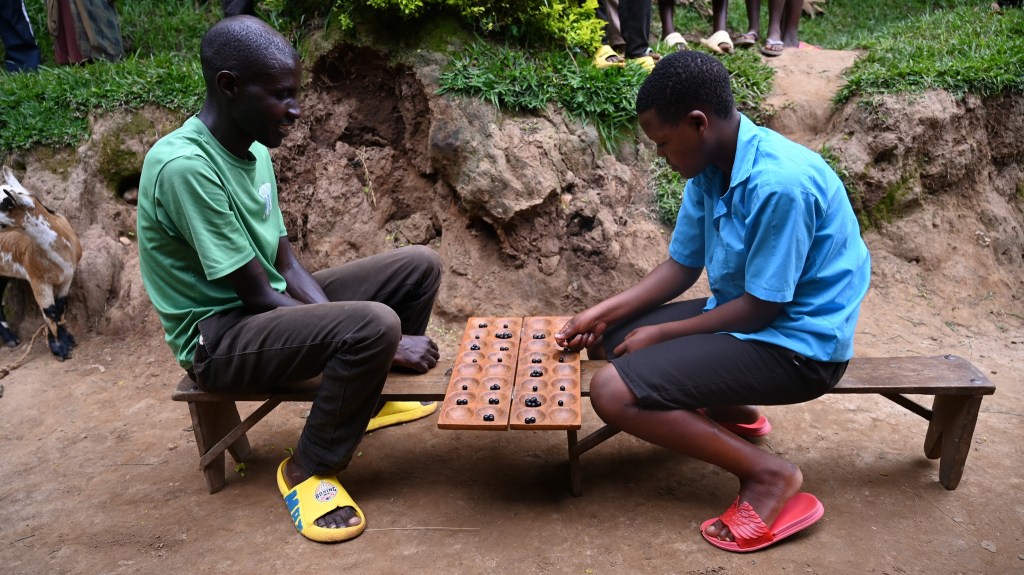
These games are not genealogical ancestors of chess. Their significance lies instead in cognition and social organization. Mancala-type games require forward planning, numerical reasoning, delayed gratification, and sensitivity to systemic balance. They model circulation, accumulation, and depletion rather than direct confrontation. From an anthropological standpoint, they represent early formalizations of rule-governed abstraction.
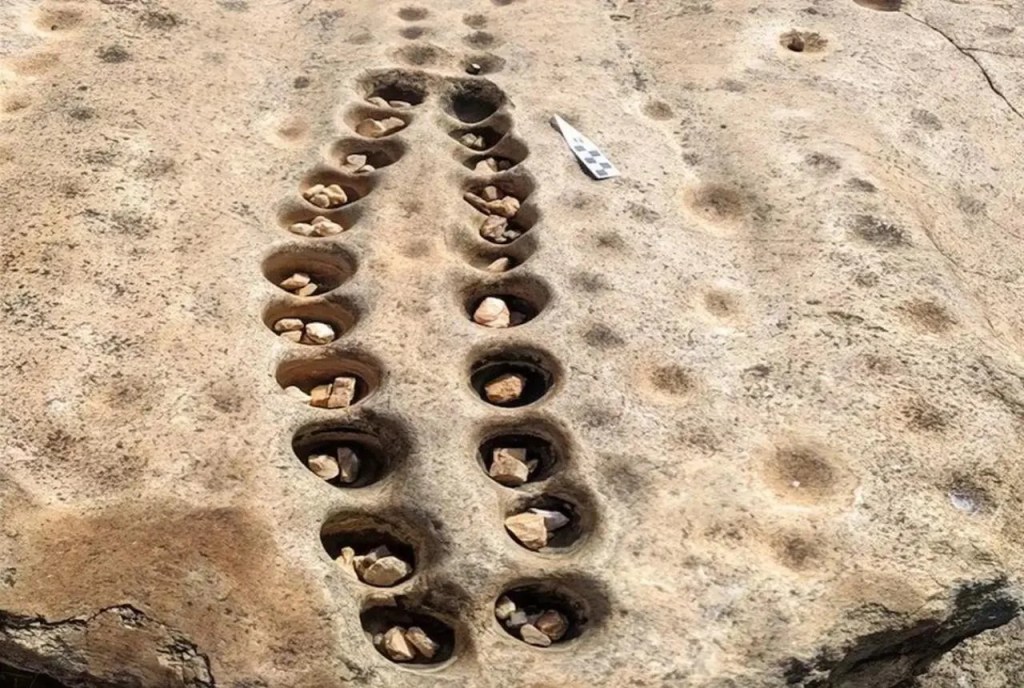
Such traditions demonstrate that long before the emergence of chess, societies—particularly in Africa—had already developed sophisticated practices of strategic reasoning embedded in everyday social life.
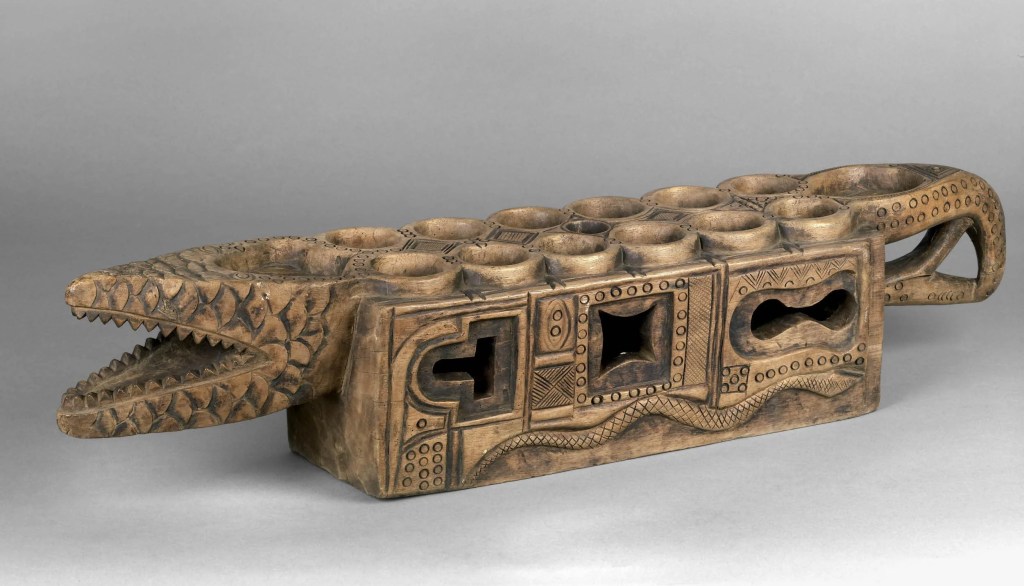
Tin mancala game board in the shape of a crocodile, Nigeria, unknown date
2. Senet and the Symbolization of the Board
By approximately 3000 BCE, ancient Egypt had developed Senet, one of the earliest known board games with standardized layouts and regulated movement. Senet functioned within a symbolic and religious framework; the board represented a journey structured by moral order, fate, and transition, often linked to the afterlife.
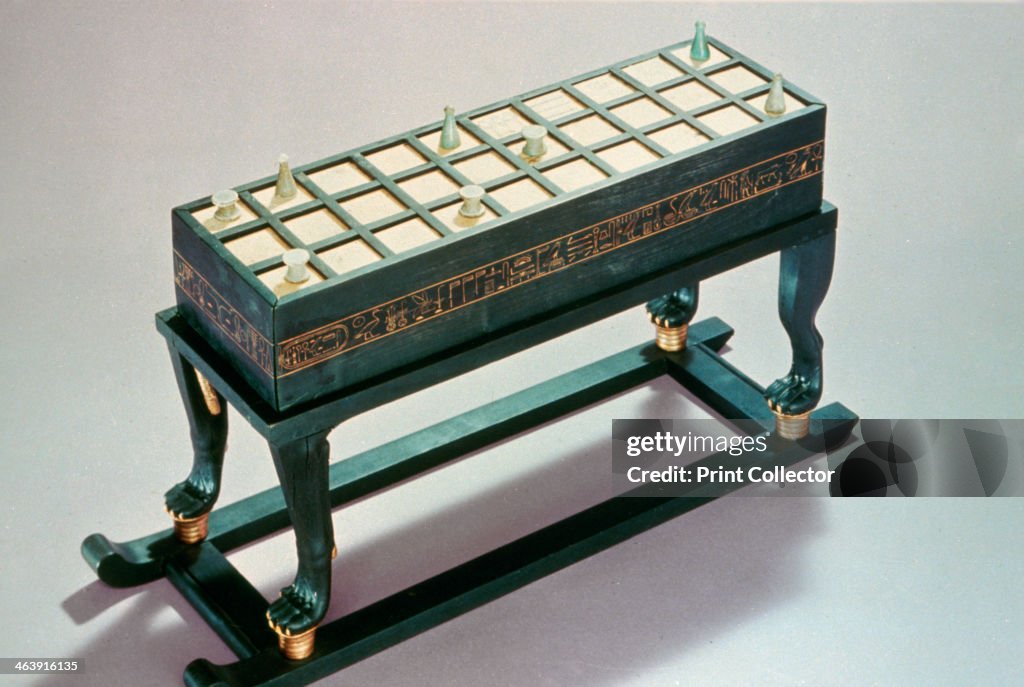
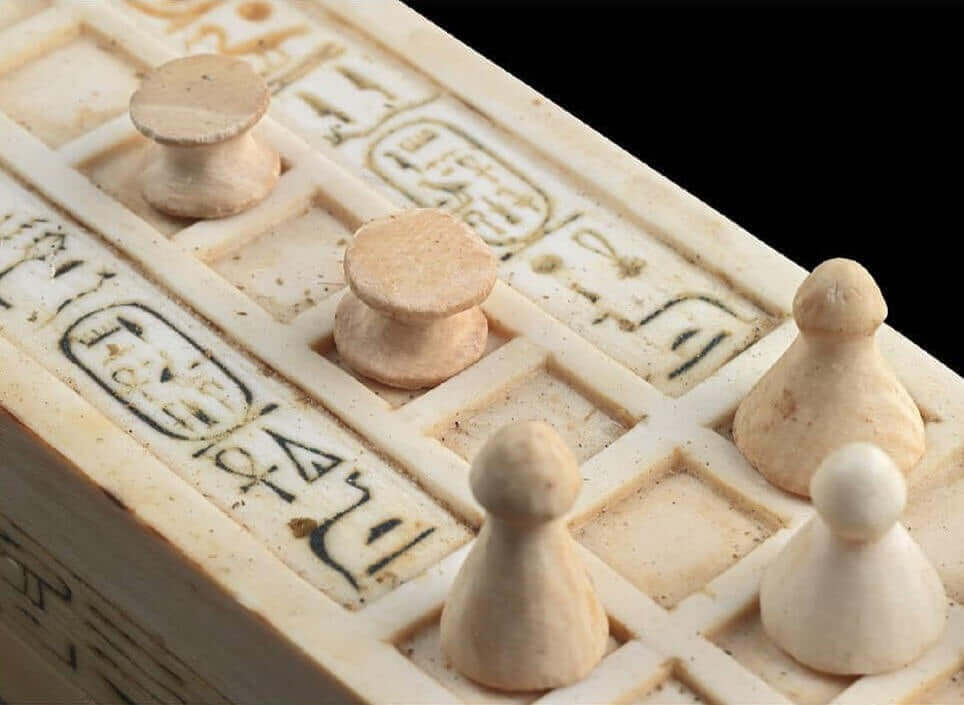
Senet is neither a war game nor a structural ancestor of chess. Its importance lies in the transformation of the board into a meaningful abstract space governed by fixed rules and social legitimacy. The game exemplifies how play could operate simultaneously as recreation, ritual, and moral instruction.
This conceptual shift—treating the board as a symbolic world—constitutes a significant precondition for later chess-like abstractions.
3. Transmission, Contact, and Hybridization
Games are highly mobile cultural forms. They require minimal material resources and adapt readily to local norms. Long-distance trade and contact networks linking the Nile Valley, the Horn of Africa, South Arabia, Persia, and South Asia facilitated sustained interaction over millennia.
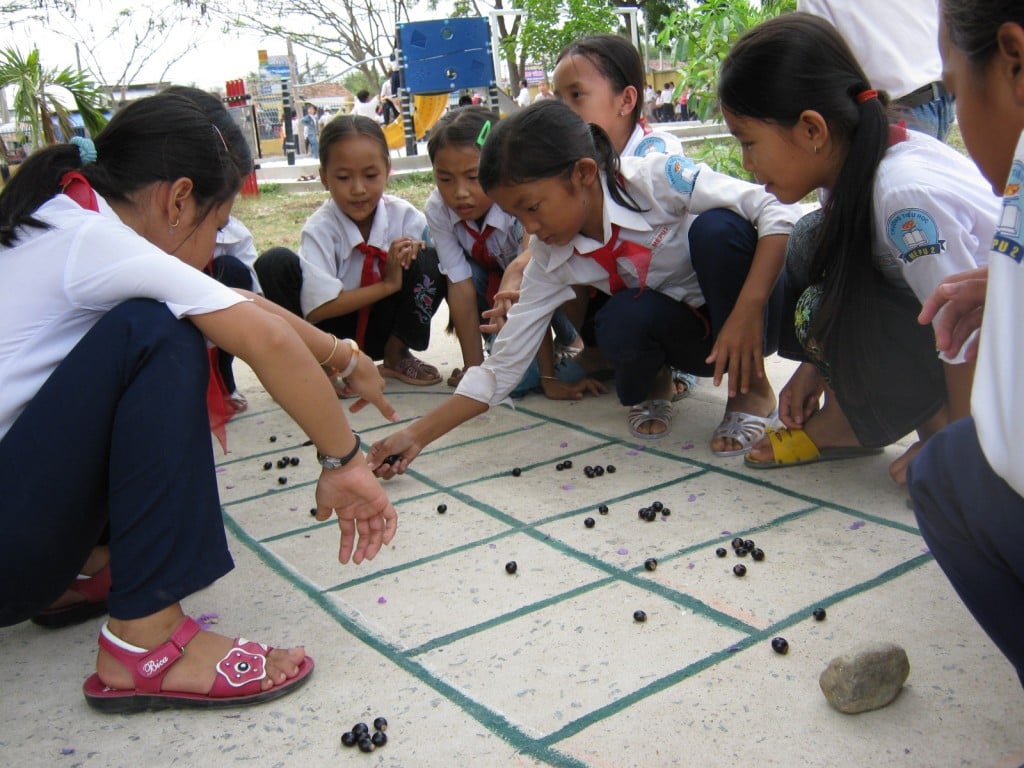
Ô ăn quan (Vietnamese Traditional Stone Game, Quan Capture Game, or Vietnamese Mancala) is a traditional Vietnamese children’s board game.
Within these exchange zones, distinct traditions of play intersected. Communal and flexible African play practices encountered increasingly codified and hierarchical systems associated with early states. Rather than a single evolutionary line, the development of chess-like games reflects processes of layering, selection, and hybridization.
Ethiopia occupies a particularly significant position within this network, later serving as a site of preservation and transformation for chess-related forms.
4. Chaturanga and the Militarization of Strategy
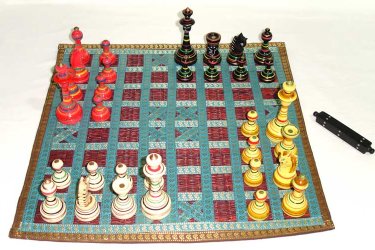
Chaturaji, meaning “four kings,” originated in India, with its earliest detailed description appearing around 1030 AD in Al-Biruni’s book *India*.
Between roughly 500 BCE and 600 CE, the South Asian game chaturanga (and related forms such as chaturaji) introduced a decisive structural synthesis. For the first time, several elements appear together in a stable configuration:
- a grid conceived explicitly as a battlefield,
- pieces with differentiated and asymmetric movement,
- a central ruler whose defeat determines the outcome,
- direct correspondence between game pieces and military divisions.
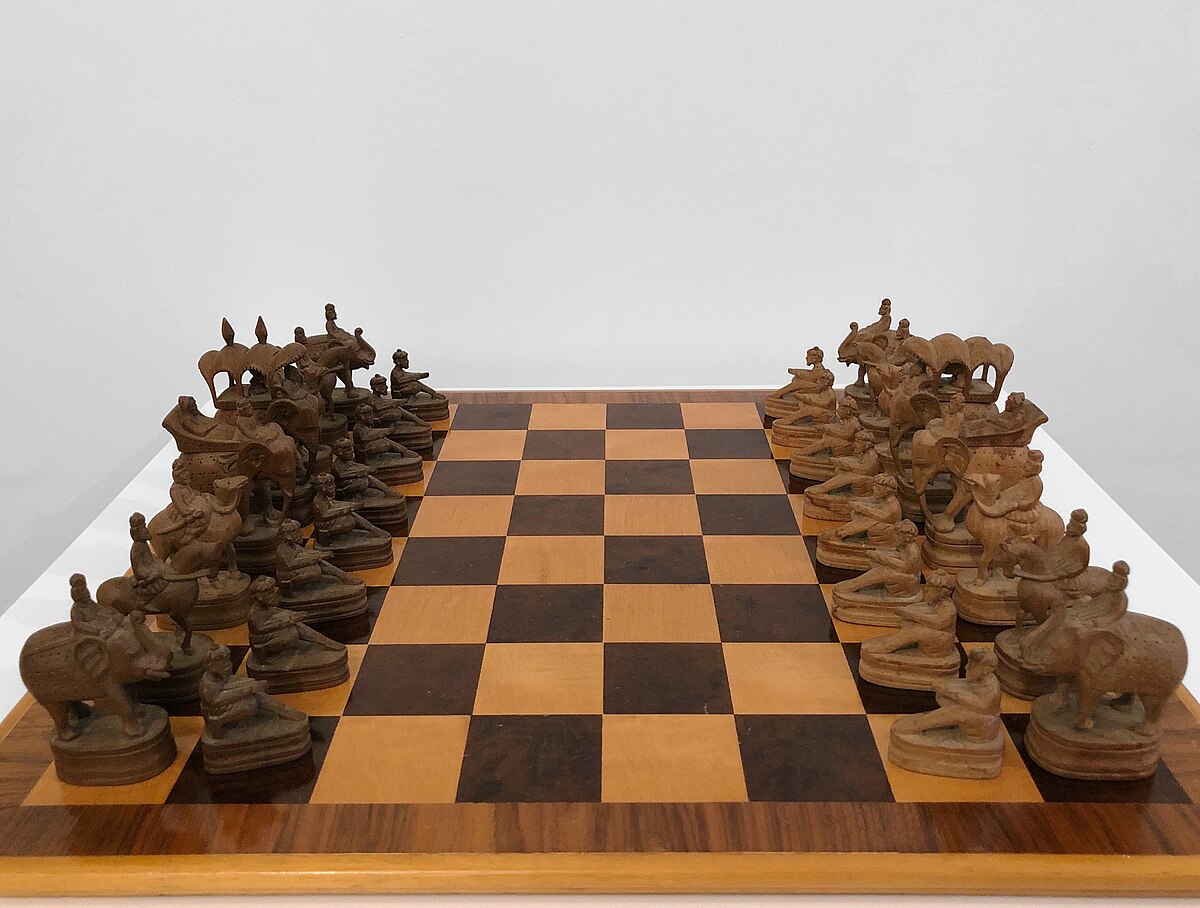
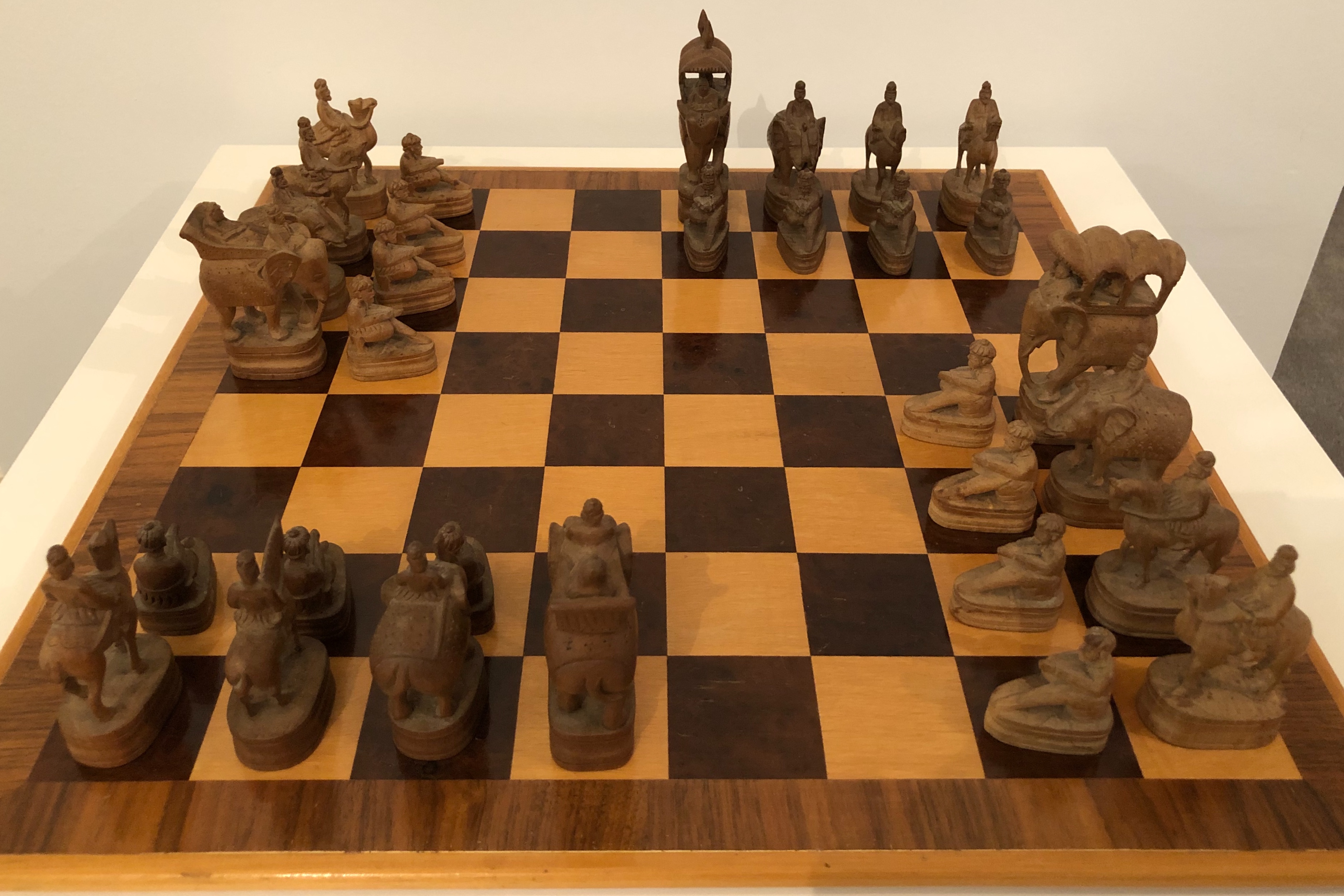
At this stage, strategic play becomes explicitly martial. The board no longer represents a journey or system of circulation, but organized conflict between opposing forces. This structural coherence underlies the identification of chaturanga as the closest historical antecedent of later chess traditions.
5. Shatranj and Senterej: Regional Transformation
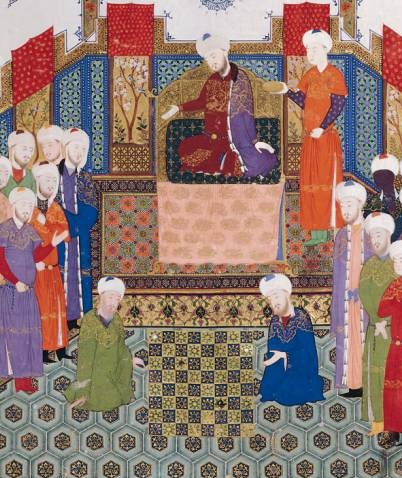
As chess spread westward, it developed into shatranj in Persia and the broader Islamic world. Shatranj was characterized by slower tempo and strong ethical associations, and it appears frequently in literature, philosophy, and visual art.
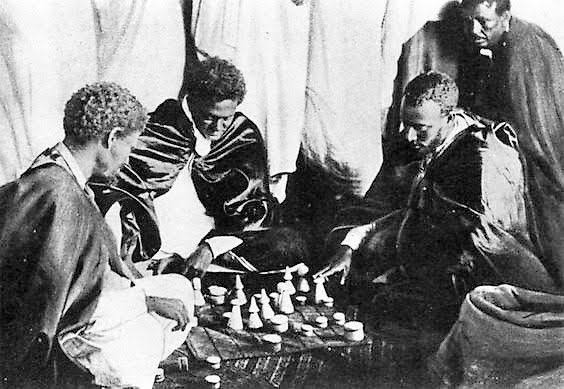
Ethiopian nobles “Dejazmatch Gebre Selassie” and “Dejazmatch Ali” playing chess in the early 20th century
From this sphere, chess reached Ethiopia, where it became senterej. Senterej retained features that were later eliminated elsewhere: flexible rule interpretation, communal arbitration, delayed or non-instantaneous checkmate, and strong performative aspects. Competitive authority resided less in codified rules than in collective judgment.
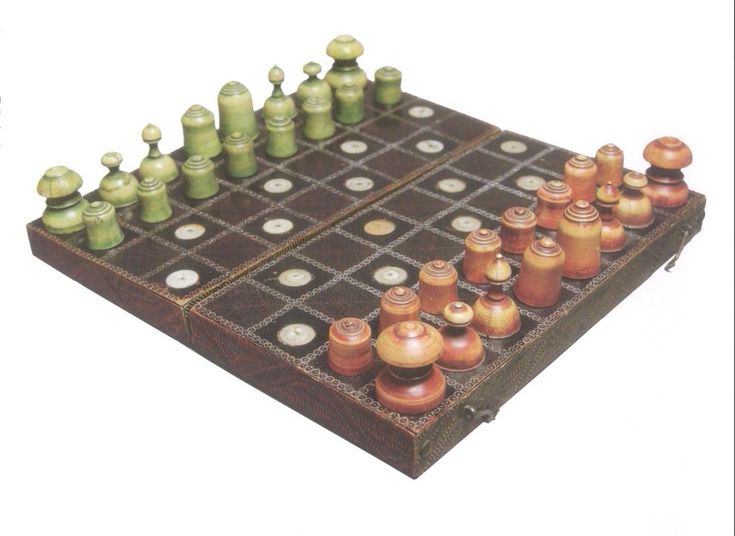
17th – 18th Century Shatranj Chess Set from Kurdistan
Senterej illustrates that African societies did not merely adopt chess but reshaped it according to existing social and cultural logics.
6. Parallel Chess Traditions in Asia
Asia constitutes a central locus of chess-like systems rather than a peripheral recipient. Several fully developed strategic games emerged or stabilized independently, each reflecting local military, philosophical, and social frameworks.
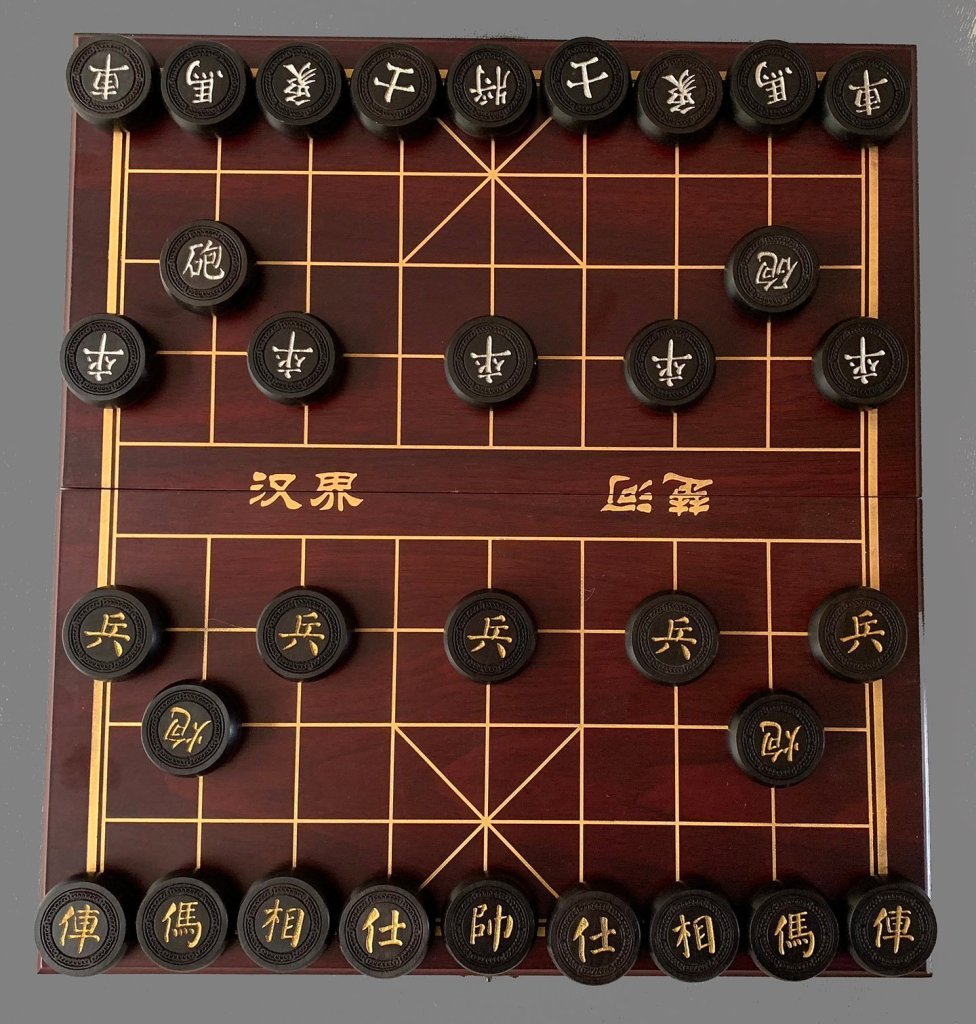
Xiangqi (China) incorporates rivers, palaces, and artillery, emphasizing constraint, tempo, and positional pressure.
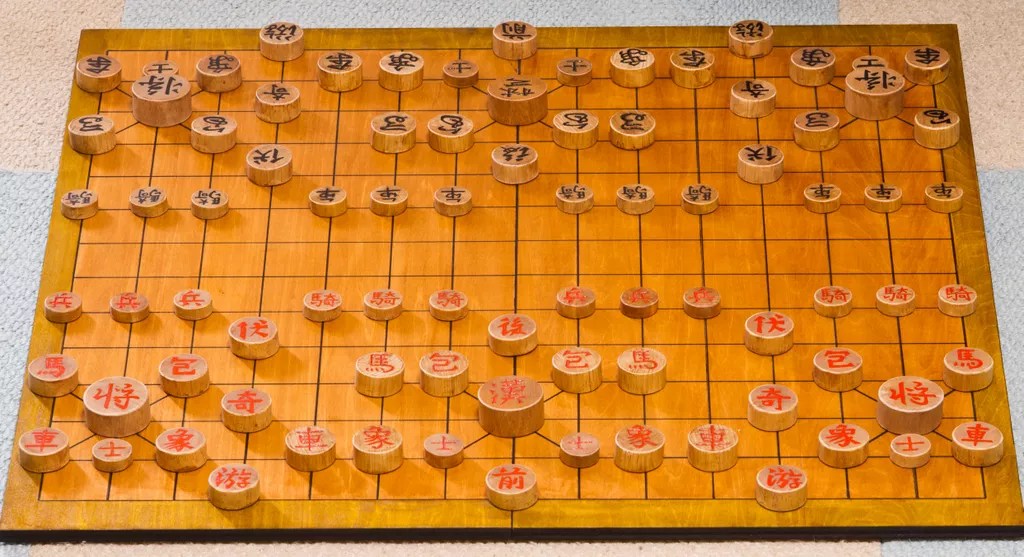
Janggi (Korea) modifies this structure to produce a more open and dynamic system.
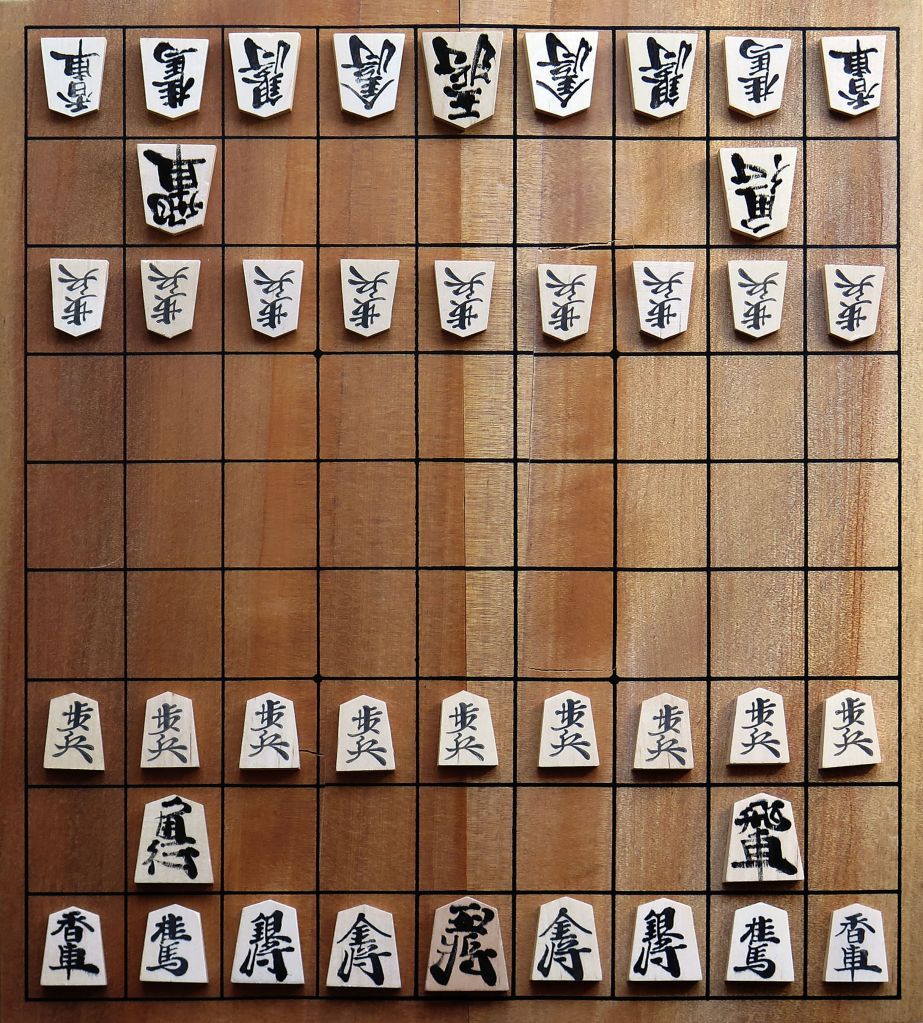
Shogi (Japan) introduces the rule of piece redeployment, fundamentally altering strategic equilibrium and reflecting concepts of transformation rather than elimination.
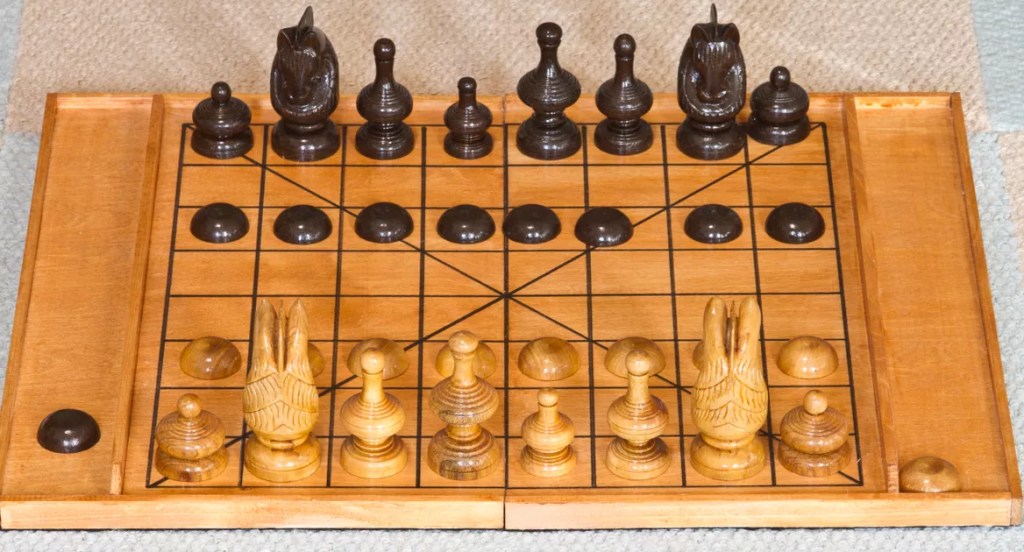
Makruk (Thailand and Southeast Asia) preserves slower movement and strong endgame orientation and remains embedded in everyday educational practice.
These games are not simplified derivatives of modern chess; they are autonomous strategic systems sharing a family resemblance grounded in abstraction and adversarial modeling.
7. Simplification and Diffusion: Draughts and Alquerque
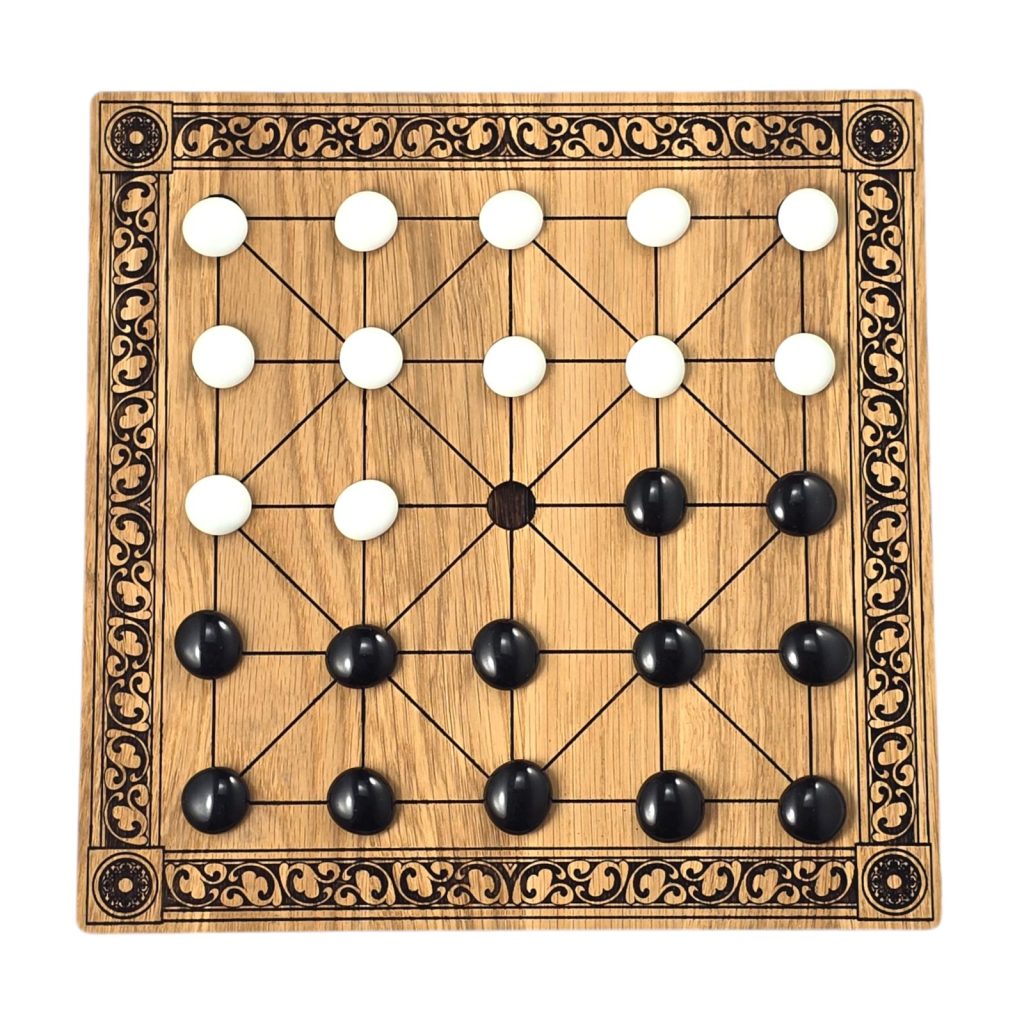
Chess also generated simplified descendants. In medieval Europe, alquerque merged with the chessboard to produce draughts (checkers). Draughts retained the spatial logic of chess while eliminating piece hierarchy, emphasizing accessibility and speed. Promotion mechanics preserve a minimal form of hierarchy within an otherwise egalitarian structure.
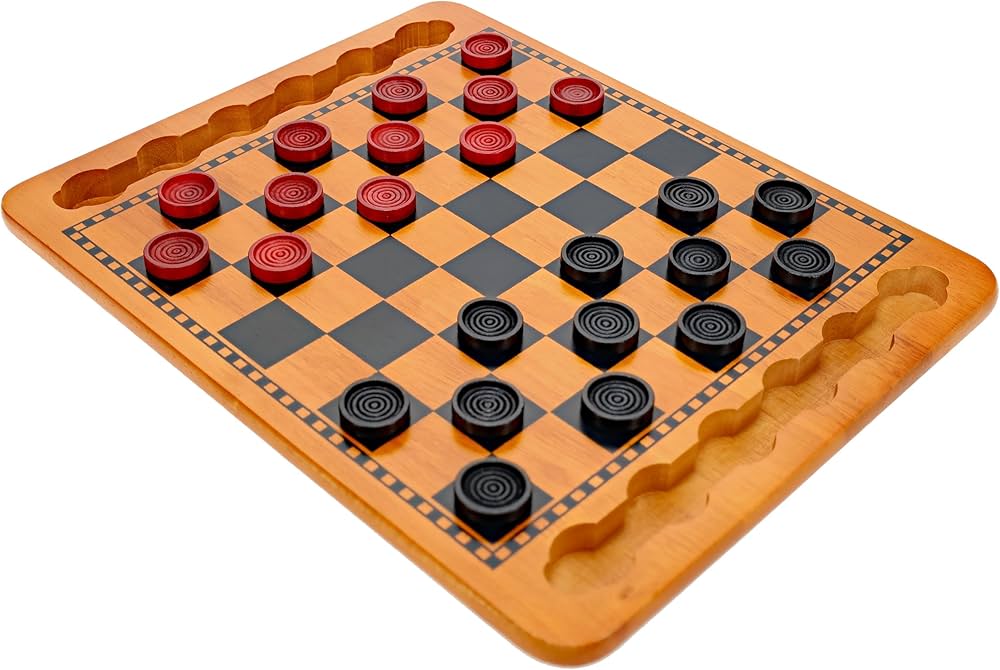
This process demonstrates how strategic systems can be selectively reduced without losing their core logic.
8. Other Strategic Lineages: Tafl Games
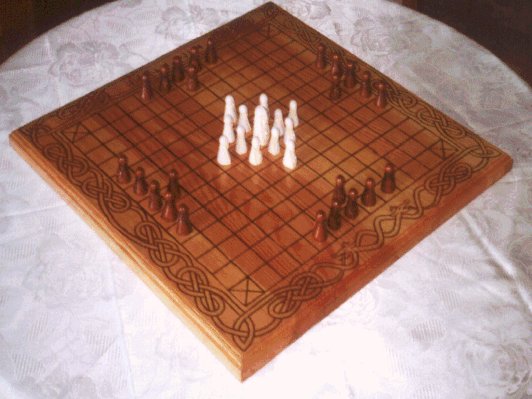
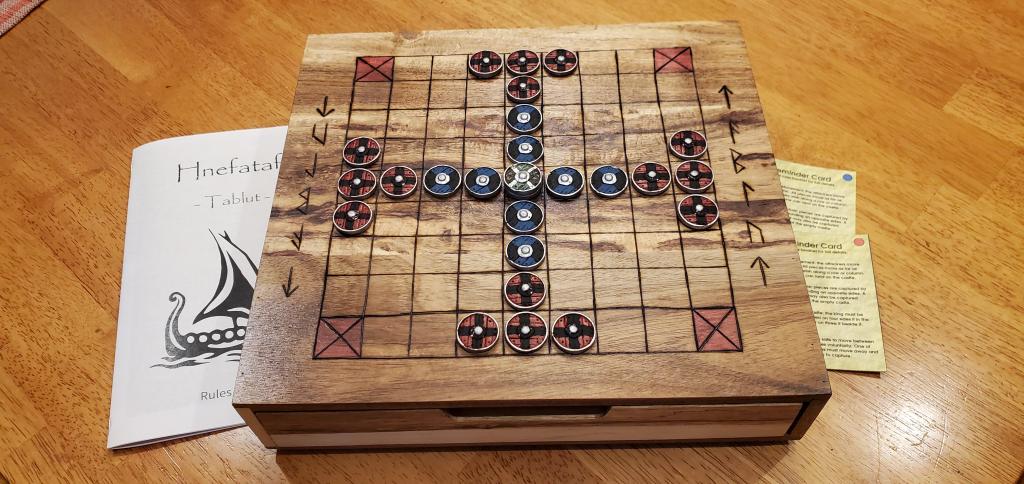
The northern European tafl family, including Tablut and Hnefatafl, predates chess but later coexisted with it. These games feature asymmetric forces and a central king whose capture or escape determines victory. While not derived from chess, they shaped regional understandings of space, authority, and conflict.
9. Modularization and Pedagogy
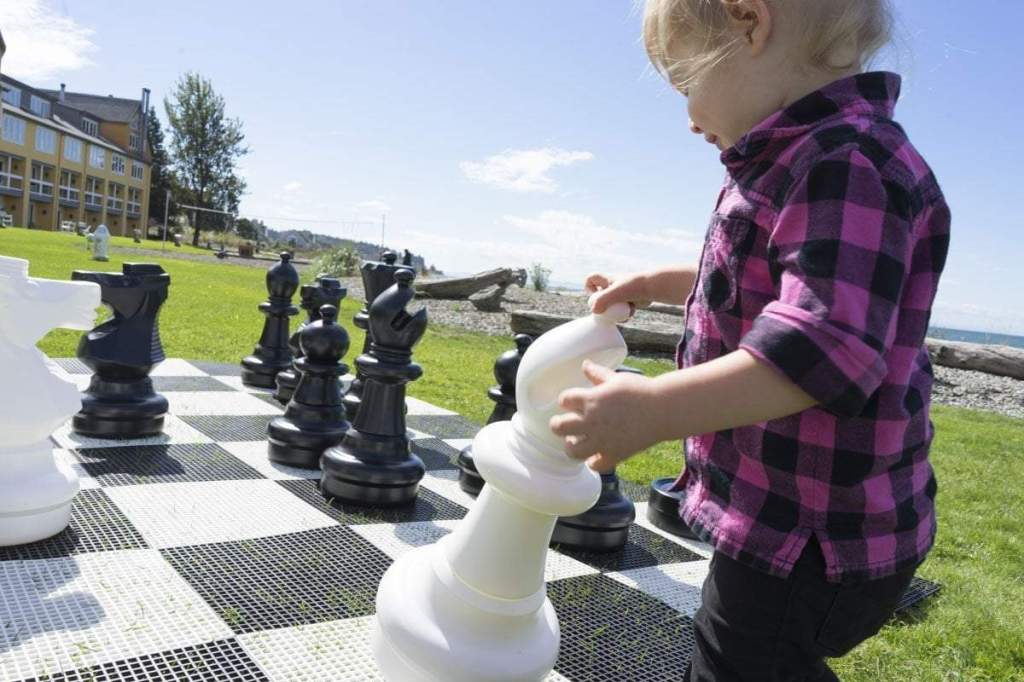
In modern contexts, chess continues to fragment into pedagogical forms: reduced-board variants, pawn-only structures, endgame studies, and problem compositions. These formats isolate specific strategic principles, reinforcing chess’s role as a flexible instructional tool rather than a fixed artifact.
Conclusion
From an anthropological perspective, chess represents neither a singular invention nor a universal endpoint. It is one historically contingent expression within a much older and broader human tradition of strategic abstraction. Mancala-type systems, symbolic board games such as Senet, martial syntheses like chaturanga, and parallel Asian chess traditions all contribute to this landscape.
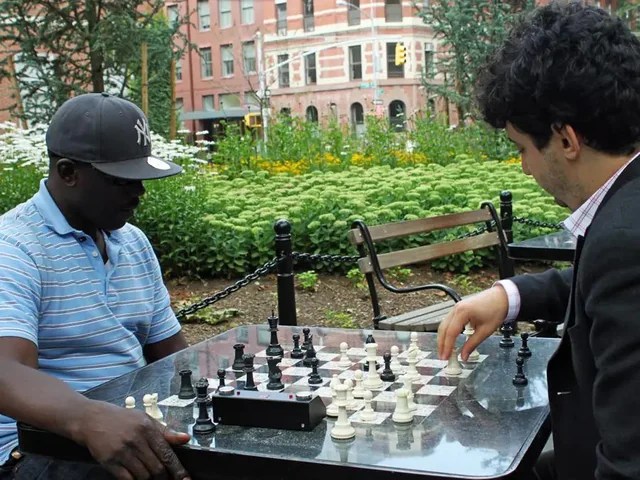
Understanding chess in this way reframes it as a cultural technique for reasoning about complexity—shared, adaptive, and continually reinterpreted rather than owned by any single civilization.
 11:11 Master mind